Capsule Intelligence Station | Beyond the Low-Price Race: Multi-API "All-in-One" Capsule Technology Is Being Rapidly Adopted by Leading Players
Capsule Intelligence Station | Beyond the Low-Price Race: Multi-Formula "All-in-One" Liquid Technology Is Being Adopted by Leading Brands
Introduction
In the dietary supplement sector, multi-ingredient formulas have become a core way for brands to differentiate. Yet R&D and product managers keep facing the same challenges: ingredient incompatibility, high susceptibility to oxidation and rancidity, and poor consumer experience from taking too many pills every day. Drawing on three authoritative international references in pharmaceutics and food science, this article breaks down the next-generation, high-value format—Liquid-Filled Hard Capsules (LFHC).
01
Industry pain points: why multi-ingredient formulas are so difficult
Today's consumers are more informed and demand more from supplementation—Omega-3 fish oil, vitamin D3/K2, plus water-soluble VC or probiotics in one regimen. For brands, this creates two major headaches:
- Poor swallowing experience: under traditional models, full-spectrum coverage may require 4–5 tablets or softgels daily, hurting compliance and repurchase.
- Ingredient conflicts: minerals such as iron and copper, or water-soluble actives, when mixed directly with sensitive oils (fish oil, astaxanthin), can trigger pro-oxidation and rapidly cause oil rancidity and loss of activity.
How can brands achieve "no conflict" while "packing all nutrients into one capsule"?
02
The solution: Liquid-Filled Hard Capsules (LFHC)
Instead of several doses, pack the whole combo into one.
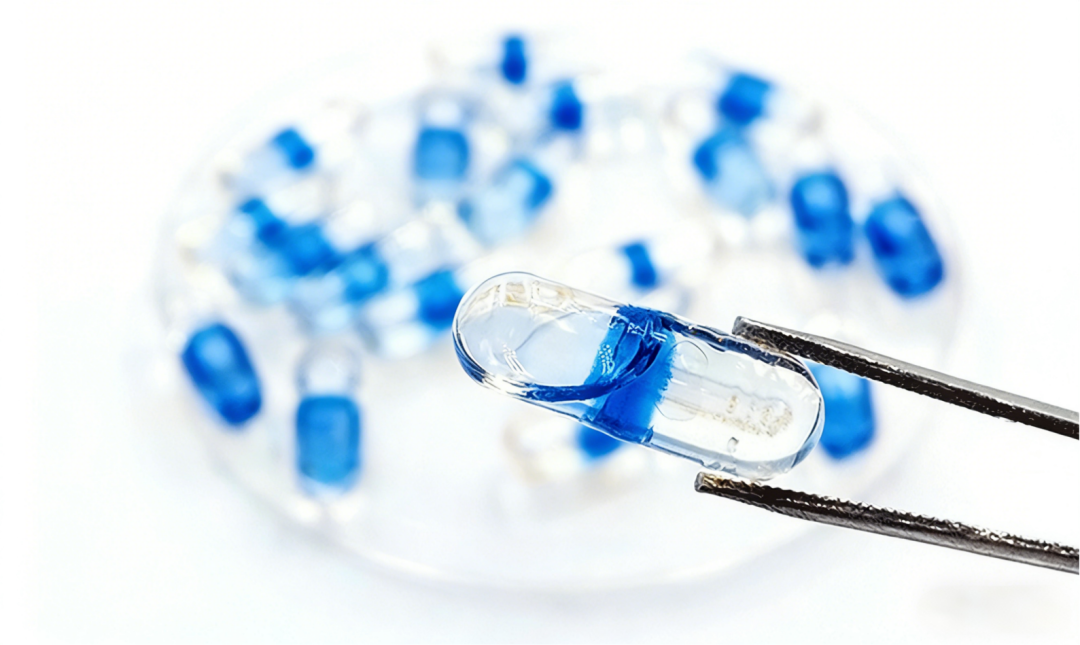
For these pain points, "beadlets-in-oil / combo caps" LFHC technology offers an effective solution:
- Key selling point—visual and efficient: consolidate multiple actives previously taken as several pills into one capsule; resolve incompatibility, simplify dosing, improve appearance, and create stronger premium positioning.
03
Technical breakdown: why it solves incompatibility
This is not just about appearance; it is supported by solid science.
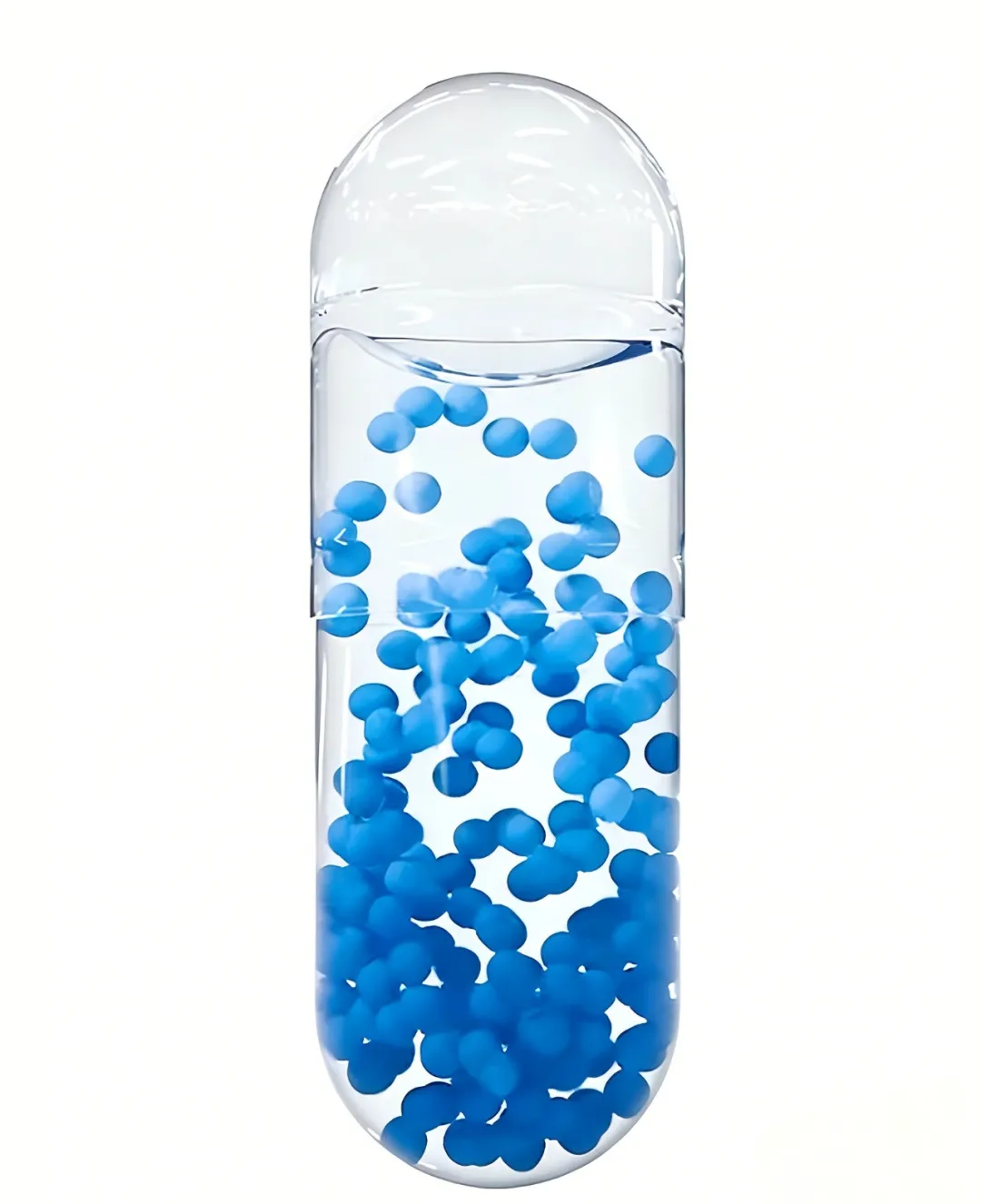
LFHC combo structure
- Oil phase matrix: Omega-3, astaxanthin, vitamin D3/K2 — immediate release, base delivery.
- Protective beadlets/pellets: water-soluble VC, probiotics, minerals — sustained release, physical isolation.
- Physical barrier to block oxidative degradation
Science: food science research shows that transition-metal ions and water-soluble catalysts in multiphase systems can sharply accelerate oxidation and rancidity of unsaturated fatty acids.
Technology: water-soluble actives are converted into polymer-coated beadlets and physically isolated from the anhydrous oil phase—"co-filled but not in contact"—to protect activity throughout shelf life.
- Stability and site-specific release
Science: a 2021 Pharmaceutics review notes that LFHC overcomes softgel drawbacks such as susceptibility to cross-linking and higher water content.
Technology: combined with plant-based HPMC shells (ultra-low moisture <5%) and anhydrous oil base, LFHC provides a hydrophobic, light-protective barrier for sensitive probiotics and actives, enabling dual-phase control—liquid immediate release plus beadlet enteric/sustained release.
- Lipid carrier for better absorption
Science: classic Nature Reviews Drug Discovery literature confirms that lipophilic nutrients such as vitamin D3, CoQ10, and lutein dissolved in lipid carriers can stimulate bile secretion and form micelles/emulsions, improving intestinal absorption 2–3 times versus dry powder.
04
Partnership with UnicornShell
As a high-technical-barrier format, LFHC is reshaping the dietary supplement shelf. As a technology enterprise focused on plant-based pharmaceutical excipients and innovative dosage-form solutions, UnicornShell provides an end-to-end service—from customized HPMC capsule shells, oil/beadlet combo formulation, high-precision liquid filling and band sealing, to full-process quality compliance. We deliver strict leak-control and stability management, and offer concept-to-commercialization support tailored to each brand's positioning.
References
- McClements, D. J., & Decker, E. A. (2000). Lipid oxidation in oil-in-water emulsions: Impact of molecular environment on chemical reactions in heterogeneous food systems. Journal of Food Science, 65(8), 1270–1282. DOI: 10.1111/j.1365-2621.2000.tb10596.x.
- Alalwan, A. N., et al. (2021). Liquid-Filled Hard Capsules for Oral Drug Delivery: Challenges and Opportunities. Pharmaceutics, 13(2), 240. PMID: 33645480.
- Porter, C. J., et al. (2007). Lipids and lipid-based formulations: optimizing the oral delivery of lipophilic drugs. Nature Reviews Drug Discovery, 6(3), 231–248. PMID: 17332724.


 +86 021 6910 8726